Eco-what?
I discovered ecopoetics during my MA at the University of Warwick. Since then, I’ve been fascinated with the imbrication of ecology, or “oikos” (household), and poetics, “poiesis” (to make), which is anything but seamless. While Jack Collom conceptualises poetry as a “branch of ecology” (ecopoetics 04 7), there is also, as Jonathan Skinner reminds us, “nothing inherently ecological about poets” (ecopoetics 01 182). If we’re assuming that the “eco-”prefix is more than a trendy accessory, ecopoetics raises a number of questions about the aims, forms, textures, and shapes of an ecopoetics. For instance, how can a human poetics that’s inevitably rooted in the human perspective, become entwined with the oikos? How can human language ever speak (to) the world around us? What exactly is that world around us, anyway? And who is “us”?
Before diving any deeper, let me provide a little bit more context.
In Britain and North America, the term ecopoetics started to gain popularity in the 90s. In the wake of the launch of modern environmentalism and the introduction of a wider notion of “ecology” into literature, the American Studies scholar Lothar Hönnighausen described ecopoetics as “the special poetics emerging from ecological concerns, reflections relating questions of poetic form to the more comprehensive socio-political and moral philosophy inspiring them” (281). In this respect, ecopoetics included a clear eco-political component. Hönnighausen and other scholars identified it as a successor to nature poetry, which recognised that romanticised representations of an untouched natural realm could no longer do justice to an environment increasingly impacted and polluted by human activity. The very idea of “Nature” had come increasingly under siege as technological advances and socio-economic developments heralded the start of late-stage multinational capitalism. Amidst the Cold War, the global expansion of the financial market, the race to space, and environmental disasters such as Chernobyl, Bhopal, and Exxon Valdez, the 80s witnessed a substantial number of literary works dealing with what Bill McKibben (1989) described as the “end of nature”: the idea of nature as an independent realm separate from society, so McKibben, was no longer tenable (if it had ever been).
Nature is not a place to visit. It is home.
Gary Snyder
One key figure for early ecopoetics was the Pulitzer-Prize-winning poet Gary Snyder. Descending from the Beat Generation and Black Mountain School, his “poetics of wilderness” found a middle ground between tradition and experiment. Informed by anthropological research, it skilfully wove together non-dualistic thinking modes inspired by Zen Buddhism with an intimate local sense of North America. (You can read some of his poems here.) It wasn’t only Snyder’s poetry, but his critical work, combined with his general bioregional lifestyle that added to his growing legacy as “the most complete ecopoet” (Scigaj 271). Snyder became something of a cult figure, with international reach and a significant influence on counter cultural movements on the West Coast and elsewhere. His lifelong dedication to environmentalism and deep ecology embodies ecopoetics as much more than something that happens on the page or in literary studies departments: an acceptance and expression of the “wild” in and around us; an acknowledgement of the world as an interconnected ecosystem that is complex, uncertain, and forever beyond human understanding; a step away from anthropocentrism and towards more-than-human compassion. Snyder reminds us that “wilderness” — what we perceive as pure, untamed natural spaces — "may temporarily dwindle, but wildness won’t go away” (16), even if it becomes harder to see: “Shifting scales, it is everywhere: ineradicable populations of fungi, moss, mold, yeasts, and such that surround and inhabit us. Deer mice on the back porch, deer bounding across the freeway, pigeons in the park, spiders in the corners.” (15)
Three decades after Snyder penned these lines, at a moment where human hubris finds its peak in transhumanist visions and dreams of global domination, this sentiment has lost nothing of its pertinence. At the same time, wilderness itself has indeed, and continues to, dwindle. In response, it is not only ecopoetics that has steadily gained momentum, but a whole new field of environmentally-oriented research, today known as the Environmental Humanities. Other subfields such as ecocriticism, new materialism, or political ecology emerged. Associations were founded, anthologies published, canons established, challenged, and re-established. Different strands of ecopoetics surfaced, some of them using it synonymously with the generally more popular term “ecopoetry”. Although both were initially acknowledged as loose terms, attempts at definition and categorisation increased with their growing institutionalisation, so much so that Jane Sprague wrote in 2007: “I resist ecopoetics. And definitions of ecopoetics. I resist it as a neat category into which one might insert my own work, like some car slipping into its slot on the freeway.”
“I resist ecopoetics. And definitions of ecopoetics. I resist it as a neat category into which one might insert my own work, like some car slipping into its slot on the freeway.”
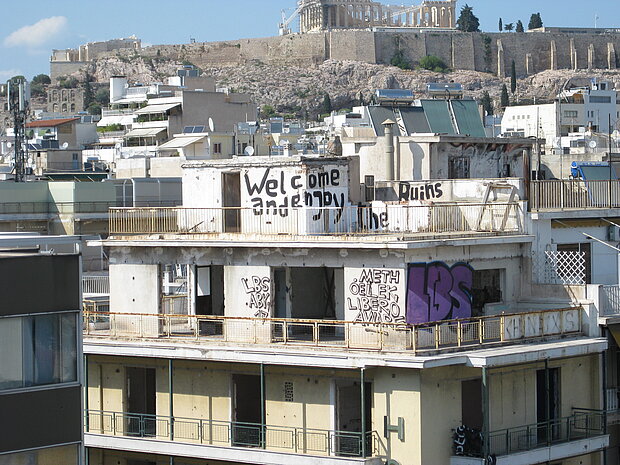
What is at stake here? Sprague points to the danger of ecopoetics turning into a convenient tag without any deeper meaning. A term that initially set out to challenge neat categories, embrace uncertainty, and seek out new ways of thinking and writing with the earth was, and continues to be, subsumed by the structures of an all-encompassing neoliberal system that has the power to even turn critiques of itself into profit. Like everything else, environmentalism has become a business, and academia is part of that business. Coining new terms and establishing new disciplines is not only an academic trend but a way to attract publicity and funding. How can our poetics resist becoming complicit in these structures? How can we uphold ecopoetics as a “passionate, a necessary interest", as Evelyn Reilly (260), with recourse to Marcella Durand phrases it? An “interest” that continues to be critical of labels and categories, including its own?
Until today, there appears to be a rift between those who like to slip cars into slots and those who interrogate ecopoetics as something other than “updated nature poetry.” (Reilly 255) Circling back to the beginning, it’s probably unsurprising which side I'm taking (— and I'm aware that the depiction of two sides is a simplified one, if not un-ecological in itself. Something to think about). I seek to embrace ecopoetics as a “creative-critical edge”, “where different disciplines can meet and complicate one another”. (Skinner, ecopoetics 01 6) I don't use the terms “ecopoem” or “ecopoet”, because they enclose poetry and writing in unhelpful and unproductive ways, making us jump to conclusions instead of coming up with new beginnings. At the risk of making things overly complicated — and / or overly vague — I conceive ecopoetics as something that needs to be activated to offer reflection, contextualisation, connection, and critical, reflective, and imaginative inquiries into epistemological, ethical, and ontological questions. If it is actually trying to interrogate structures of power, then ecopoetics is necessarily a risky beginning. If it doesn't do that — why use it in the first place?
The Earth has enough for everyone's need but not for everyone's greed.
Mahatma Gandhi
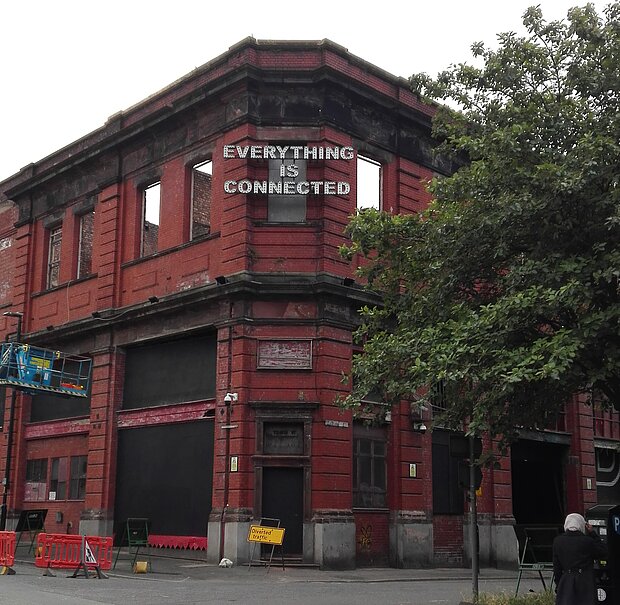
For me, then, ecopoetics is an ongoing investigation of how “eco” and “poetics” clash, connect, disconnect, and challenge one another. It is not just about literature but about the edges of language, knowledge, humanity, and the earth itself. It is about attending to things that do not fit as much as it is about unfitting things, moving out of comfort zones, irreconcilable paradoxes, things we do not know and things we do not know we do not know. Ecopoetics is a radical experiment, a radical “poethical wager”, to use Joan Retallack's words. Amidst a complicated, interconnected, and unforeseeable world, ecopoetics is sustained by the knowledge that, in this moment, in any moment, “we have nothing to lose except everything. So let us go ahead.” (Camus 174)
This may all sound fairly complicated, but it really isn’t. You want to make ecopoetics? Take a look around you. Put your phone down. Plant a flower. Ask a question. Accept more than one answer. Do some writing. Think: connectedness. Practice: empathy. Go: ahead.
*Please remember that this is merely ONE origin story of ecopoetics and modern environmentalism, one blade of grass in a wild garden that can never be fully captured.
Works cited:
Camus, Albert. ‘The Wager of Our Generation’. Resistance, Rebellion and Death, translated by Justin O’Brian, Hamish Hamilton, 1999, pp. 169–75.
Collom, Jack. “An Evolution of Writing Ideas, and Vice Versa: A Personal Essay”, ecopoetics 04/05 edited by Jonathan Skinner, Periplum, 2005, p. 3-60.
Hönnighausen, Lothar. ‘"By Division, out of wonder": Gary Snyder, Wendell Berry, and Ecopoetics’. Soundings: An Interdisciplinary Journal, vol. 78, no. 2, 1995, pp. 279–91.
McKibben, Bill. The End of Nature. Random House, 1989.
Reilly, Evelyn. ‘Eco-Noise and the Flux of Lux’. Eco Language Reader, edited by Brenda Iijima. Portable P at Yo-Yo Labs/Nightboat, 2010, pp. 255–74.
Retallack, Joan. The Poethical Wager. U of California P, 2003.
Scigaj, Leonard M. Sustainable Poetry: Four American Ecopoets. The UP of Kentucky, 1999.
Skinner, Jonathan. ecopoetics 01, Periplum, 2001.
Snyder, Gary. The Practice of the Wild. Counterpoint, 1990.
Sprague, Jane. ‘Ecopoetics: Drawing on Calfskin Vellum’, Ecopoetics and Women, edited by Harriet Tarlo, How2, 2007, www.asu.edu/
Read more on ecopoetics
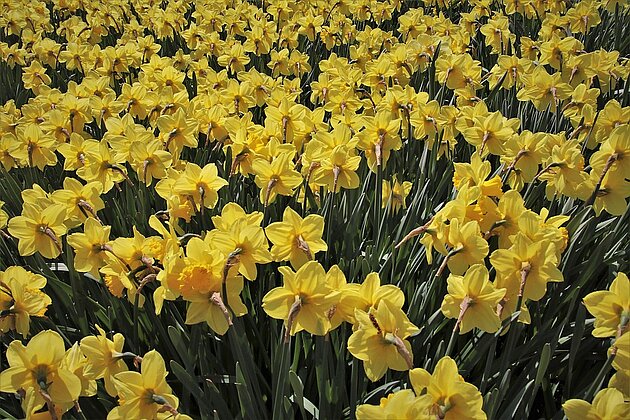
Unframing Wordsworth's Daffodils. A practical and theoretical poetry class
Let's unpack Wordsworth's famous poem from an ecopoetical perspective.
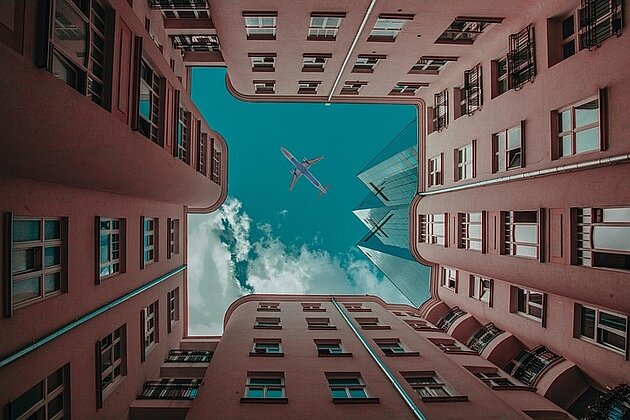
"Where are you from?" Making Ecopoetic Homes
Read my creative-critical take on being asked the question “Where are you from?”